


Beyond lighting and composition, the true magic of food photography lies in the human touch. Food is deeply personal it’s made by someone, for someone. When you include hands or subtle human elements in your images, you instantly communicate care, craftsmanship, and intention. The dish no longer feels mass-produced; it feels homemade, warm, and trustworthy. For small businesses, home bakers, and creative entrepreneurs, this emotional authenticity is incredibly powerful for building brand connection.
Adding hands doesn’t just enhance the visual appeal, it transforms the viewer’s experience. Instead of simply thinking, “That looks nice,” your audience begins to imagine themselves in the moment: tasting the dish, preparing the recipe, sharing it with others. This shift from observation to participation is what drives engagement, connection, and ultimately action.
Our eyes are naturally drawn to human elements. Hands guide the viewer through the image and lead attention directly to what matters most the food.
Instead of relying only on contrast or color, you’re using human instinct to control composition.

Without people, food can feel abstract. Hands instantly communicate:
For example :hands holding a cake feels different than one sitting alone on a plate. The viewer understands it faster and more intuitively. It gives a sense of size of the cake and holding in on the air make it feel lighter.
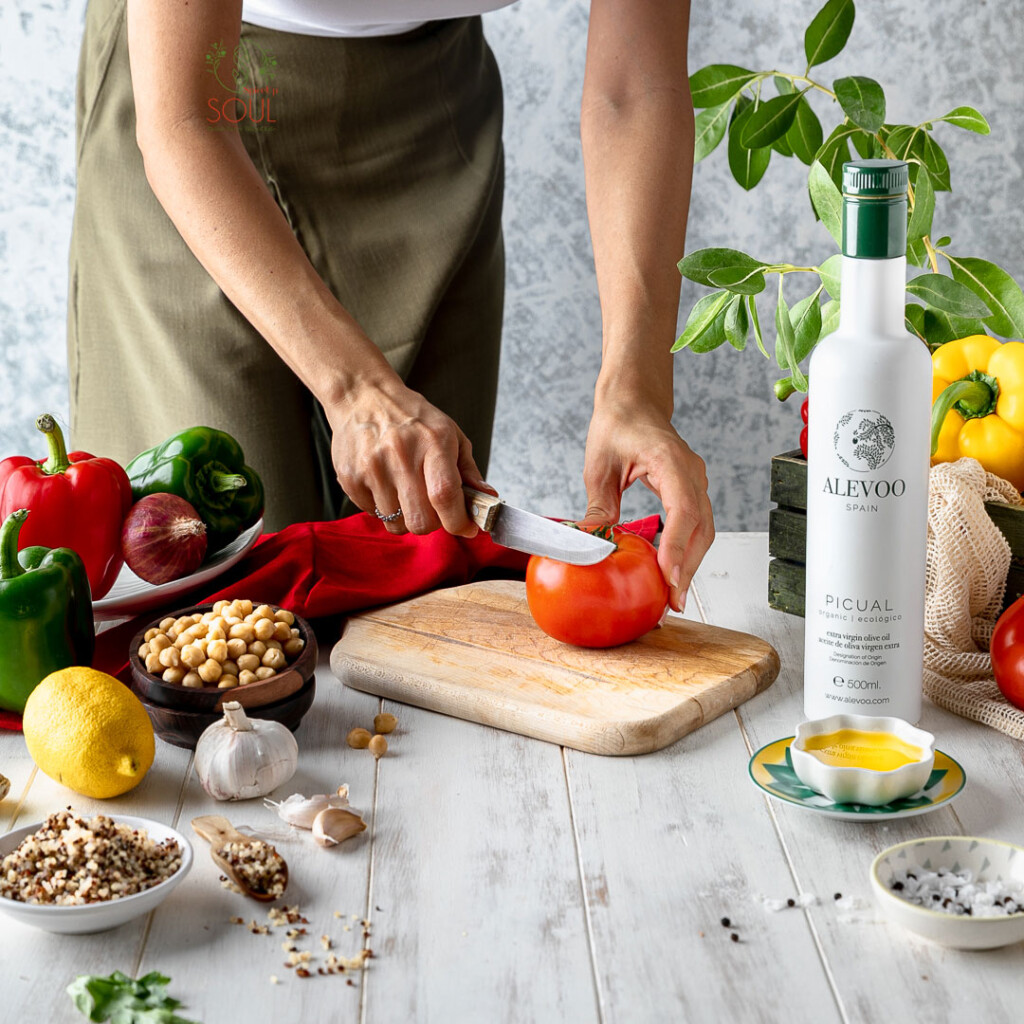
actions like cutting a tomato, sprinkling herbs, adding ingredients, introduce Motion, Energy and depth to the images.
In a flat lay (shot from directly above), everything is arranged on a flat surface. But when you add a hand, it still adds depth just in a subtle way.
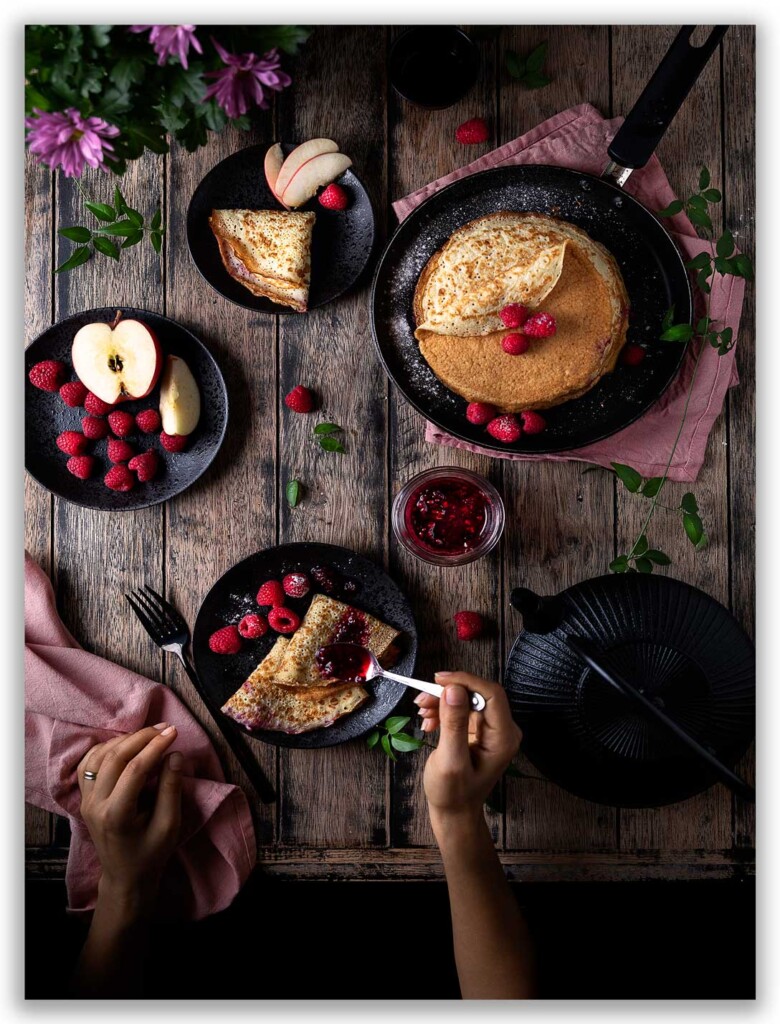
Even though the camera is above:
This creates tiny shadows and slight height differences. Those small changes help the image feel more layered and alive, instead of looking like everything is printed on one flat sheet of paper.
The next time you style a shoot, don’t just focus on how the food looks. Think about how it feels and invite your audience into the moment.
Ready to take your food photography to the next level? Subscribe to my newsletter for more tips, and inspiration on food styling, visual storytelling.
Thanks to be here.
Angelica
Recipes
Leave a Reply